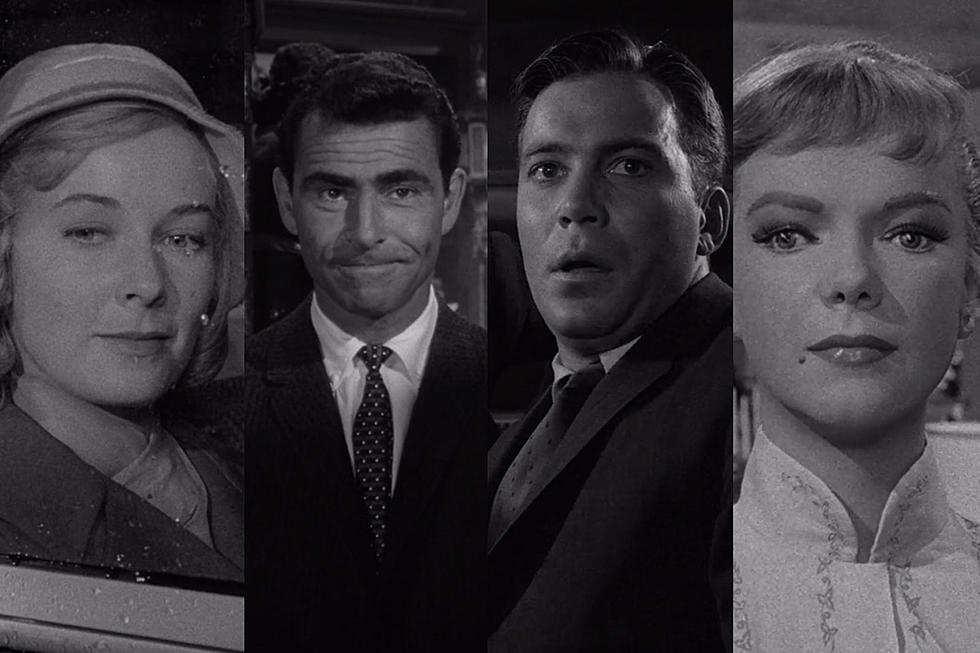

The Underrated Rod Serling Films Every ‘Twilight Zone’ Fan Should Watch
Before there were David Chase, Vince Gilligan, and Taylor Sheridan, there was Rod Serling.
In an era when television was referred to as a “vast wasteland” by government officials and critics, Serling’s work helped prove otherwise. He became so well-known for his tough, thoughtful television plays that he not only received the opportunity to create his own sci-fi anthology, he got to host it as well.
Serling’s The Twilight Zone ran for five seasons on CBS. More than 60 years after it ended its initial run, it remains one of the most beloved TV shows in history. So beloved, in fact, that when I got the opportunity to talk to Alan Sepinwall about his terrific new biography Serling: A Journey Into The Twilight Zone With TV’s First Visionary, I thought it would be a more valuable use of my time to discuss some of Serling’s other great work that doesn’t get the attention or scholarship of The Twilight Zone.
I asked Sepinwall to pick three underrated Serling projects we could discuss; anything, I said, except episodes of The Twilight Zone. His picks, and our conversation about them, follows below.
Requiem For a Heavyweight (1956)
Serling won a Peabody Award (and his second straight Emmy Award for writing) for this live TV play about an aging boxer (Jack Palance) who must decide what to do with his life after a doctor declares him unfit to fight. The play was remade as a theatrical film six years later, starring Anthony Quinn in the Palance role.
Singer: Why the TV version, rather than the film version?
Sepinwall: I picked this one because, first of all, it's really important. You want to factor in Sterling's time as a writer of ’50s scripted live television. That's this huge part of his career that’s almost completely unknown now. People think “Oh, he's The Twilight Zone guy.” They know that he was on camera. That's what he's famous for.
[Serling’s television play from 1955] Patterns is the thing that made him famous. And I think there's good stuff in Patterns [but] I don't think a lot of it holds up hugely well when you watch it all these years later. Requiem, I think, is still really good. I think the story, the characterization, the performances, especially by Jack Palance, are wonderful.
And Serling wrote a lot of different variations on it over the years. He wrote this short story in college called “The Good Right Hand” about a boxer who breaks his hand, and then “What am I gonna do?” He did another thing called The Twilight Rounds. Because the thing Rod was obsessed with besides boxing — which he did himself in the Army — was, ‘What am I gonna do when one day I can't write anymore?”
The the TV play aspect of it is is interesting to revisit. It's an art form that is basically non-existent today. It was born of technological limitations, obviously, but you see here that when it's done well, it can be very powerful. And it was making me think “Maybe somebody should should do a live TV play?” And I remember there have been some examples of people trying to resurrect it in the ’90s? Didn’t they do Fail Safe with George Clooney?
Clooney is huge into live TV. He made them do the live ER episode. He did live Fail Safe. They did a Good Night, and Good Luck for television at some point.
I definitely think the idea of it is great. Even just a filmed play. It doesn't have to be a pro shot. Just “Hey, we're gonna have a playwright come in and do the sort of thing they would do for the stage,” but as a TV movie.
Part of it is just the death of the TV movie, you know? I guess we have them now, with films that go straight to streaming ... the technology is primitive, but also theater at the time was considered by far the highest art form available in America. So, hey, we can do a play for television and that will make you feel a little classier for owning a TV set.
And yet one of the things that you talk about in the book was that Serling was one of the most famous TV play writers, but he didn't really have a lot of success on Broadway. Why do you think that is?
I talked to Anne Washburn, who did The Twilight Zone play in London about a decade ago. And she said [the stage] is just a different kind of muscle. He also struggled, frankly, writing for movies other than the one we're going to talk about. And I think it's just a different set of skills. Both of them are filmed entertainment, or in the case of a live teleplay and then a play.
Yet the things that he was good at seem to really work well in a TV context versus as a play, and I don't know that he necessarily put enough of the effort into ‘How am I different if I'm writing a play? How am I different if I'm writing a screenplay? How am I different from writing a novel?’ He tried doing all of these other kinds of writing, and some of it's really interesting, but a lot of it just doesn't work because he didn't already have that skill set, and he was ultimately an impatient guy who [thought] “I know how to do this thing. That's what I'm gonna do.”

You mentioned in the Acknowledgments of your book that you liked The Twilight Zone and some other things, but you were not a Serling scholar or anything like that when you started the project. So I'm curious if there was anything that was particularly revelatory to you during the process? I know from writing books myself that you start out with certain expectations, and then through the research, there are discoveries you do not anticipate along the way.
One of the big appeals to me of getting to do this book was I'd always heard about Requiem for a Heavyweight; I'd heard about Patterns. I knew about Serling's pre-Twilight Zone rep. But I’d never had an excuse to watch the stuff, and a lot of it's on YouTube. So that was cool.
But the big discovery was seeing how much of his stuff was autobiographical, which was, frankly, a godsend for me because I'd never written a biography before. And I just went in thinking, “How am I going to structure this? How is this going to work?” And when you start learning about him, and then you watch the stuff at the same time, you're like “Oh, this comes from this part of his life. This comes from this part of his life.” And it gave me the whole way that the book is shaped.
I like reading biographies, but I'm a really impatient reader sometimes, I guess like Serling. And I'm like, “I understand that this person's childhood is important. I understand that the early parts of their career are important. I really want to get to reading about the thing that they're already famous for.” And so I thought, “Well, how am I going to get people to read about Serling as a kid in Binghamton or Serling in the war, Serling in college, and not feel the same way I do?” And I realized I'm just gonna take the famous writing and use that to sort of draw parallels. So you're reading about Twilight Zone long before you actually get to The Twilight Zone.
Seven Days in May (1964)
Almost all of Serling’s most popular and acclaimed work in his lifetime was all on television, but he did write a number of film scripts, including the one for this Oscar-nominated 1964 thriller, directed by John Frankenheimer, about an attempted coup of the U.S. government by the hawkish Chairman of the Joint Chiefs of Staff (Burt Lancaster), who is disgusted by the President of the United States (Frederic March) and his plan to sign a disarmament treaty with the Soviet Union.
Why did you pick this one?
Because it's the best movie he wrote. He wrote a bunch of films that actually got released, and he wrote a lot of others that didn't — and I read some of those scripts. The movies were a struggle for Serling. Several of the movies he wrote are just god awful. [The 1958 Western] Saddle the Wind is bad. I think he said it should have been called Saddle the Fart.
[The 1966 thriller] Assault on a Queen with Frank Sinatra; such a good premise, and it's the most boring goddamn thing. Everyone failed on that, including him. And even Planet of the Apes, which is by far the most successful movie he was associated with, most of his work was rewritten. I've read his draft, and it’s very good too, but I don't know if that version would have been the enduring hit that the Michael Wilson is. [Wilson rewrote Serling’s Planet of the Apes script.]
I also think the Requiem for a Heavyweight movie is good too, although I prefer the TV version, in part because I like Palance more, in part because I like the ending more. I'm not in love with the dark ending that he went with for the movie. But Seven Days in May is like the one where it's like “This is Rod Serling, screenwriter.” It all works.
At least half of that is just Frankenheimer, because Frankenheimer was a great director. They worked together a bunch. The thing that Frankenheimer was better at than almost any director who ever lived was, “What's an interesting visual way I can show this?” And so you have a movie that's super talky, like almost all of Serling's stuff, but it's being done by this hugely dynamic visual stylist. And so you're never bored as you're just getting monologue after monologue after monologue, because it's being shot really well. So it's exciting, even though it's just philosophical arguments about pacifism versus war.
You mentioned reading some of his scripts. I'm sure you've read lots of scripts by lots of writers over your career. What do you make of Serling's scripts? How do they compare to watching the actual films or TV shows?
The TV shows, when you read those, they're good. Most of the movie scripts that I read were written for stuff that didn't get made. And sometimes I would listen to him dictate them, and that was cool. Because he's just saying, like, “Name, line of dialogue, punctuation, spelling,” and he's going a mile a minute. I have no idea how anybody could work that way. Obviously you're writer, I'm a writer, and when you're really feeling it, the words are flowing out of you. But that’s at a keyboard. I feel like the keyboard is sort of this necessary intermediate step to make sure it makes sense. He’s just talking, and it’s great.
But in terms of the scripts themselves, I read a couple in great detail. One was The Salamander. It is this Italian conspiracy thriller. And eventually, it was made [in 1981], cheaply, and it's a 90-minute movie. And his script was, like, 180 pages. He did not cut anything out of the book, whatsoever, and it's also him sort of struggling to do, “more adult content,” which mostly meant like he could have people curse and someone's looking at a Playboy centerfold, that kind of thing. It felt like, “All right, I'm trying to do this thing that is not necessarily in my comfort zone.” So that's not great.
And [1970’s] RPM — revolutions per minute — is about liberal activism on college campuses and, you know, hippies and all of that. It's almost entirely, again, monologues and speechifying. And on the page, it's not that exciting. But maybe if somebody like Frankenheimer had directed it as opposed to Stanley Kramer ... and he got Erich Segal from Love Story to write it. [Serling’s work on the film was uncredited.] And it stars Anthony Quinn.
Anthony Quinn was in The Salamander too.
There you go. They kept crossing paths.
When you're listening to those dictated scripts, does he sound like the Rod Serling that I imagine The Twilight Zone? Does he speak differently when he's not on camera?
He's a little bit older, because most of the ones that have been like preserved are from like the last seven, eight years of his career. You can hear him do a Night Gallery, and his voice is a little bit older. His daughters would say he didn't talk that way in real life. But every interview you watch with him, that's how the guy talks! He sounds like the host of The Twilight Zone, and every character he wrote talked like him. So you hear him dictating and it sounds like it's a Twilight Zone intro.
With regard to Seven Days in May, I had not seen the movie before. I haven't read the novel, so I don't know how it compares to the novel. But watching the movie, it does feel like Rod Serling. It has a lot of his themes. I don't know if you agree, I don't know if you read the book, but I could feel the Serling-ness of it, which maybe you can't feel in some of those less successful films, which I admit I haven't seen.
That's part of why it's good. Saddle the Wind or Assault on a Queen, that's just genre stuff. That was not really his interest. Even when he did a Western himself, like the TV show The Loner, that was an excuse for him to work through the same philosophical and sociological questions he was always interested in. This and Planet of the Apes are really the only two movie scripts he did that got made that feel like Rod Sterling, and the kind of thing he cares about.
And structurally, [the released film of] Planet of the Apes is largely what he wrote. The ideas are there. It's more Michael Wilson changing dialogue and changing characterization. But Serling cared a lot about nuclear disarmament. He had fought in World War II and cared passionately about that, but he became more and more anti-violence as he got older. By the ’60s, he quickly turned against Vietnam. He felt it was a mistake for us to be there. So he's writing about something with passion, and you can feel that in the writing, whereas a lot of these other things, it feels like he's going through the motions.

When you hear the description, if you don't necessarily know that it's Rod Serling, you hear, “Oh, it's about a military coup,” you imagine something more violent and more action oriented. And then you see the movie and the big climax is two guys sitting in the White House talking. The end of the movie is a press conference. When you know it’s a Rod Serling script, that does make sense because, as you said, he enjoyed his speechifying. Where does that love come from?
Some of it is just the stuff he grew up reading. I don't really touch on it in the book, but I know just from like reading letters back and forth between him and Nolan Miller, who was the writer in residence at Antioch when he went to college, that Serling loved these radio plays, which are just people talking and giving speeches because you're not seeing any of the action.
So that was his thing. He liked words on the page, and he certainly couldn't resist, I guess, because he was a guy who monologued. You watch interviews with him, and Mike Wallace asks him a question, and it's five minutes before Mike Wallace gets to interject again. So I think that was just the way he talked. He thought in monologue, and so he wrote in monologue.
And I guess that makes sense when you watch The Twilight Zone. He gives monologues in every episode, and he's so good at it. Even though he wasn't an actor, he's the perfect host and introducer of these stories, often giving these very flowery monologues, explaining the theme of whatever you are about to watch or have watched.
Yeah. I did the audiobook for [Serling], which meant I had to read aloud a number of Serling Twilight Zone monologues. And it ain't easy! Because again, he wrote the way he talked and nobody else ever talked like him. For instance, I'm just going to read this aloud. I'm not even going to try to do it right, but [adopts a Serling-esque cadence]: “In just a moment, that hope chest will be opened, and an improbable phantom will try to bedeck the drabness of these two people's failure-laden lives with the gold and precious stones of fulfillment.”
Who the hell talks like that? Nobody, except Ron Sterling. When he does it with a cigarette in his hand and in the suit, he pulled it off.
READ MORE: Every Episode of The Twilight Zone, Ranked
The last thing I wanted to ask before we talk about the last show you picked is something you mentioned, which was that you read Serling’s script for Planet of the Apes. I have always been very curious about that because I love that film, and I love The Twilight Zone, but I’ve always heard that Apes was heavily rewritten after he left the project. Do you think if they had produced his script it would have still been a success? Do you understand why they decided to rewrite him?
The main reason they revised it was for budget because his script is set in what looks like a contemporary city with apes wandering around wearing suits and ties and driving cars. For whatever reason, it was felt like dressing an entire city to look like apes live there would be prohibitively expensive. It was simpler to do it, and cheaper to do it, if they were living in a more primitive society. By the time they wanted to do that, Serling had written, I think, four or five drafts, and he was always overcommitted to different projects, and he just said, “I can't do it anymore. You guys get somebody else.”
His version of the script is a lot talkier. It's a lot more philosophical, but I think the biggest change — because the Statue of Liberty is his drafts — is the main astronaut character is a man who is arguing on behalf of humanity and is thoughtful and empathetic and all of that. And Heston’s character is like a misanthrope who hates everyone and is cynic and realizes when he winds up in this terrible situation “Oh, I have to argue on behalf of humanity because I'm literally the only one who can do it.” And that's sort of a fun idea, and that's not really present in the Serling thing.
But also, the Sterling script is not nearly as action-oriented as the Michael Wilson version. Maybe [Planet of the Apes director] Franklin Shaffner would have added some of those elements anyway, and he would have asked Rod to do it, or he would have, like Frankenheimer, just figured out stuff on his own. But the Wilson script also has stuff like “Get your paws off me, you damn dirty ape!” which is hugely quotable and not at all the sort of thing that Rod would write.
“They’re Tearing Down Tim Riley’s Bar” (1971)
Six years after The Twilight Zone ended, Serling created a similar anthology series called Night Gallery, with less successful results; the show only survived for three tumultuous seasons, with Serling given far less creative control than he’d had on its predecessor. Serling did contribute a number of Night Gallery scripts, including this one about a washed-up businessman (William Windom) on the precipice of an unwanted retirement.
I have seen the pilot or the TV film of Night Gallery. But that might be the only Night Gallery I had ever seen before this. With admittedly very little experience of watching it, I have always seen it as kind of like an inferior Xerox copy of The Twilight Zone. Would you say that's fair?
That's fair. I think there are some episodes — and “Tim Reilly's Bar” is one of them — that I think are really, really good. It’s not even so much episodes, as it is segments, because the way that the show was structured was there would be multiple stories per episode, and some of them are really good. Some of them are just awful. Some of those are ones Rod wrote, some of them are from other writers.
The guy who ran the show, Jack Laird, hated Rod. Rod hated him. It was constant fight for control. Rod was not good at writing comedy, but Jack Laird was somehow worse and he kept doing these vaudeville-style sketches in between the segments. It’s like Cesar Romero as Dracula, and he comes to a blood bank, and he's like, “You don't understand. I don't want to make a deposit. I come for a withdrawal!” It completely kills the mood.
But there are some segments that are very good, and [Serling] did a lot of good adaptations. That’s an area where he's underrated a little bit, because when he's doing an adaptation, the characters are not Rod Serling. He's working with material that other people gave him, and he would make very smart choices in how to adapt them. There's this one called “The Caterpillar.” And in “The Caterpillar,” a man is jealous, he's in love with a woman, the woman's gonna marry another guy, and this guy, Lawrence Harvey, decides, “I'm going to murder my rival so that she will have to marry me.” And he hires someone to put this brain worm in the other guy's ear. And for whatever reason, the brain worm instead winds up in Lawrence Harvey's ear, and it crawls inside and it's driving him mad and it's clearly going to kill him. It will make you never want to put anything else in your ear for the rest of your life.
I forget how the original story ends, but Sterling came up with this great new ending, which is Lawrence Harvey somehow survives the initial attack of the brain worm, and he's like, “Okay, all right. This was a bad idea. I shouldn't have done it, but I guess I'm doing okay now.” And the doctor treating him says, “Just so you know, that worm was a female, and females lay eggs.” That's a great ending. It's the perfect little knife twist and he came up with that.
The point being, Night Gallery is more up and down. It looks super ’70s in a way that Twilight Zone does not always look super ’60s. The washed out colors and the fashions; even when they're doing period pieces. It hasn't aged as well. But some of it is very good.
When we were talking about Requiem for a Heavyweight, you alluded to this, but there is this theme that runs through so much of Serling’s work going all the way back to those TV plays: This terror about getting older and becoming obsolete. It makes sense to me on a certain level in “They're Tearing Down Tim Riley's Bar.” That was written at the tail-end of Serling’s career. He's been through ups and downs. But we were talking about Requiem for a Heavyweight from 1956 and it’s present in that film as well. Why was he so fixated on this even as a young man?
It's even in the stuff he wrote in college when he was in his mid 20s. And I think part of it is his father died young, and that really scarred him. His father died in his early 50s, not too much older than Rod was when he died. He knew his grandfather had, on that side, also died young. So part of it is that Mickey Mantle thing of, “I'm not gonna live that long. I'm a ticking time bomb. What can I do with the time?”
He was also an acutely self-conscious person. Despite being really charismatic and outgoing and popular, he was always judging himself and worrying that what he did wasn't good enough, or if it was good, he was doing it for the wrong reasons. So he lived with this acute fear of “Things are working now, but eventually it's gonna fall apart and then what?” I mean, I feel that way too! I don't know how to do anything but be a TV critic and eventually there's gonna come a day where nobody's gonna pay me for that and then what? So I can absolutely relate to that.
But yeah, he was sort of an old man before he was an old man. They called him “TV's angry young man,” but he was really TV's youngest old man. He thought a lot about “What's coming later? What happens if this fails?” His dad ran a grocery business that was very successful for a while when he was a kid, and then it went bust, and they had to downsize and live in an apartment. So that was an acute thing for him as well.
The other thing about Night Gallery that I found interesting — because again, I’m certainly familiar with the concept but I didn’t know anything about the behind the scenes drama before your book — is that while Serling is the host and wrote a lot of it, he was not the guy in charge in the same way he was on The Twilight Zone. He’s working with that producer who hates him, doesn't really respect him, and doesn't always agree with his choices. And in your book, you go into how the show was butchered in syndication. And it’s fascinating to look at how shabbily people would treat television shows back then, even by a respected writer. Serling was one of the most famous writers in TV history, and this is what they did to his show!
It did make me think about how Serling dies in 1975, so he doesn’t live to see the rise of cable television. He’s only 50 years old. If he had survived for another decade or two, how do you think he would have adapted? How do you think his career would have continued if he had lived a little bit longer?
He was really struggling to find his way in the early to mid ’70s until he passed away. What would happen if he was alive for like five more years? Spielberg, Lucas, Landis, all of these guys who grew up like idolizing him would have like said “All right, Rod, please come write me a script and I will try to make that script.” There were all of these Serling fans who grew up on his stuff, were inspired to do what they did by him, and I imagine they would have recruited him in some ways. It would have been easier for him to do stuff in the movies again, working with these more adventurous filmmakers.
Once cable TV started, I think he would he would have written for that and it would have gone well for him. He would have been a much older man by the time we get to the ’90s, but I think he could have done some interesting stuff there. Frankenheimer was directing HBO movies basically until he died.
Sure, and he makes Ronin in the ’90s. He has a bit of a resurgence. And The Twilight Zone Movie, which is a misbegotten object for other reasons, is only like eight years after Serling passed away. He could have written that.
He could have. He was kind of a man out of time when he passed away. If he had held on another ten years, he would have had a whole third act. It's kind of a bummer. But he did have the incredible timing to be born when he was, in terms of breaking into television to begin with.
Right.
Because if he was even born five years later, TV as the Wild West, it would have been settled by the time he started trying to write for television, and the opportunities that he had living in Cincinnati, mailing scripts to New York, would not have been there, right? But at the same time, then he lingers long enough to get past the point where TV wants his kind of stuff, and he dies before his acolytes come into enough power that they could have given him that third act.
Alan Sepinwall’s Serling: A Journey Into the Twilight Zone With TV’s First Visionary goes on sale on October 13.
10 TV Episodes So Controversial They Were Banned
Gallery Credit: Emma Stefansky
More From ScreenCrush