
The 50 Best Siskel & Ebert Reviews
50 years ago this week, two movie critics from Chicago changed TV history.
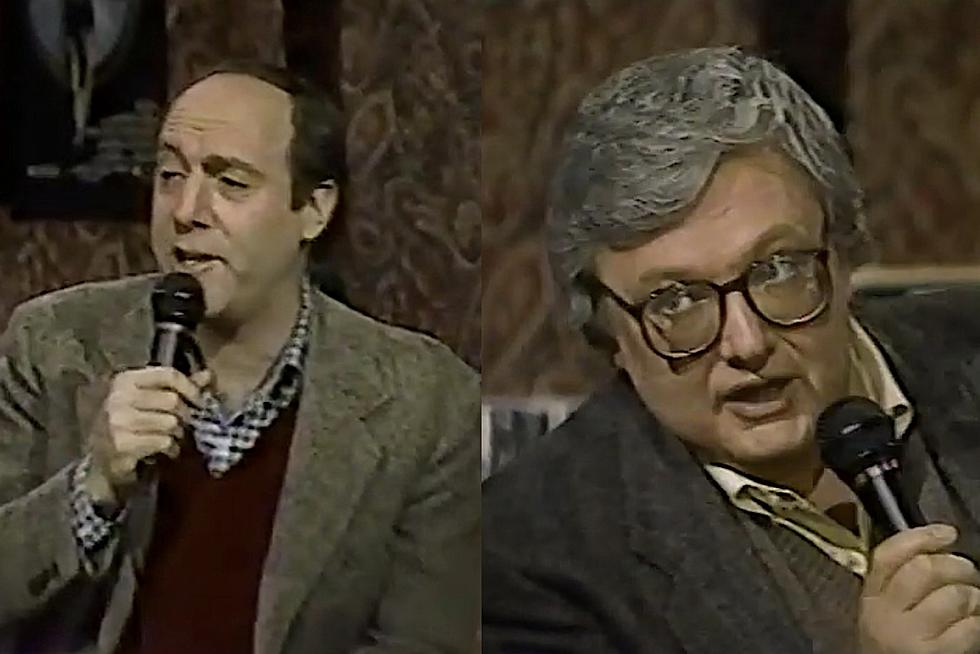
On November 20, 1975 they recorded the pilot episode of a show that was initially called Opening Soon ... At a Theater Near You. The unwieldy title was later shortened to Sneak Previews; several years later, its hosts jumped ship from local PBS to national syndication and started their own series called At the Movies With Gene Siskel and Roger Ebert. Four years later, they moved one last time, from Tribune Entertainment to Disney’s Buena Vista Television, where the series was renamed Siskel & Ebert & the Movies. A year after that, it became simply Siskel & Ebert. By that point, they weren’t just the guys who hosted the show; they were the show.
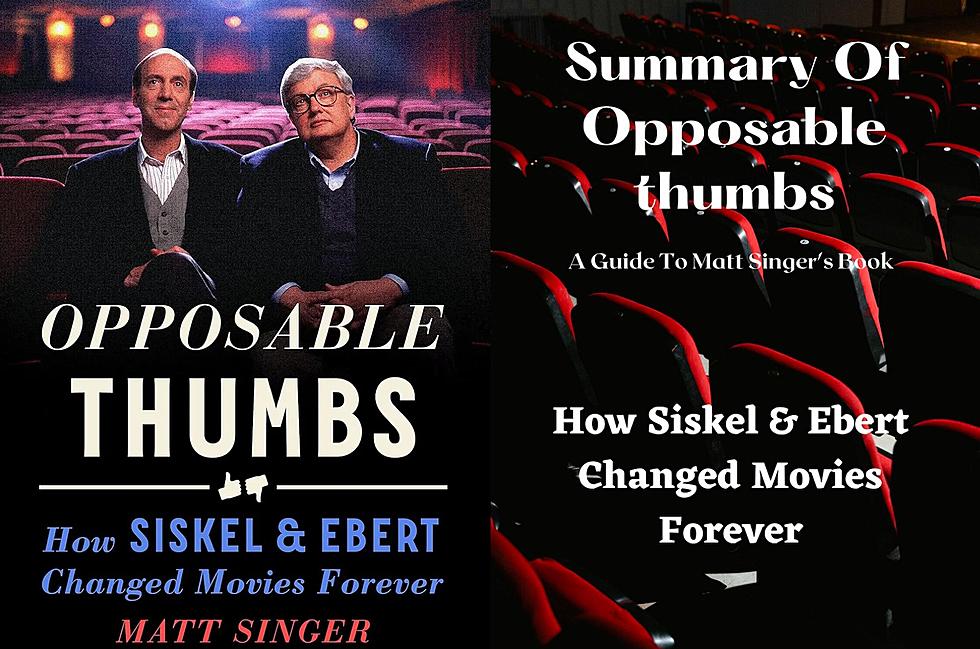
As someone who wrote an entire book about Gene Siskel and Roger Ebert, this is a subject that’s close to my heart. (And if you think I’m above a shameless plug, you are so very wrong.) My dual biography/history details Siskel and Ebert’s lives and careers, and their impact on the worlds of film, film criticism, and pop culture at large.
While it includes plenty of discussion about Siskel & Ebert, I specifically avoided any sort of ranking of their “best” reviews, simply because a book didn’t feel like the right venue for such a list. You want to be able to watch these things for yourself. Fortunately on the internet we have this amazing thing called embedded video, which means instead of just describing Gene and Roger’s yelling at each other about Cop and a Half, I can actually show them yelling at each other about Cop and a Half. And in honor of Siskel and Ebert’s 50th anniversary, that’s exactly what I’m going to do.
The 50 reviews below span the show’s entire 25-year history, and I did my best to provide a wide range of reviews; some of their infamous fights, of course, but also some of their important agreements. (Despite the stereotype that Siskel and Ebert fought constantly, that wasn’t true; they only fought a lot of the time.) I can’t quite put my thumb on why, but ranking them seemed pointless, so these are arranged in alphabetical order.
Agatha (1979)
One of the amusing ironies of Siskel and Ebert’s collaboration is that their chemistry onscreen was at its least compelling when their off-screen chemistry was at its most combustible. They really did not get along in the early years of their show, but it rarely manifested onscreen during that period because they hadn‘t gotten the hang of channeling their true selves on camera yet. This 1979 battle over the movie Agatha, a forgotten drama based on author Agatha Christie’s real-life disappearance in 1926, is one of the early signs that they were starting to find a groove together. They disagree over the movie’s pacing, and then disagree about who said what and why about earlier movies. On Siskel & Ebert, disagreements were never fully settled, and old fights could be resumed at any time.
Alaska (1996)
READ MORE: Watch Siskel and Ebert Do Karaoke Together
All art is subjective. And so is all arts criticism. One of the wonderful parts about Siskel & Ebert was the way it baked the notion of subjectivity right into the format, because there were two hosts and they could disagree with one another whenever they felt like it. And boy did they disagree about Alaska, a bland children’s film about kids searching for their missing father. Ebert liked the film well enough to recommend it and Siskel did not, and after he rebutted, Ebert replied “Your criticism of this movie is utterly irrelevant to the experience of the film on the screen and would be meaningly to anyone seeing the film!” To which Siskel spit back “Why? It wasn’t meaningless to me!” Then they debate whether children’s films should be graded on a curve because they are intended for a young audience, a subject the two returned to over and over. As it so often did on this show, a totally innocuous little film spawned a really interesting conversation about film and film criticism.
Apocalypse Now (1979)
In his later years, when asked to name a movie he might have gotten wrong, Gene Siskel would often cite one of two titles: the Paul Newman comedy Slap Shot and Francis Ford Coppola’s Apocalypse Now. When he first reviewed the film on Sneak Previews back in 1979 he gave it a flat-out “NO” review (this was before the introduction of the thumbs up and down rating system) and said it “fails completely” in its examination of the roots of armed conflict. To which Ebert responded “I think we have one of the more fundamental disagreements we’ve ever had in doing this show,” and predicted the ending of Apocalypse Now would be debated for the next 50 years. 50 years later, that feels like a pretty good prediction.
The Black Cauldron (1985)
Sometimes you tuned in to Siskel & Ebert (or At the Movies, in this case) just hoping to see Gene and Roger mix it up. That’s what you got during their review of Disney’s animated feature The Black Cauldron. In introducing his review of the film, Ebert revealed that when he was a child he felt that animated movies were more “real” than live-action ones, because “the edges were sharper and the colors were brighter.” But then he tossed in a dig: “That’s before I realized that most people looked like you and not like Pinocchio.” Never one to let an insult slide, Siskel immediately shot back “Did you ever identify with Dumbo?” When Ebert says no, Siskel needles him some more. (“How about Mrs. Jumbo?”) By the end of the exchange they’re both laughing, and they haven’t even gotten to actually discussing the film yet.
A Chorus Line (1985)
Siskel and Ebert could argue about everything — including movies they nominally agreed about. They both gave thumbs up to the film version of A Chorus Line, but their review of the film got legitimately heated after Siskel accused Michael Douglas of “overacting” in his role and Ebert defended the film’s star. Then they begin to debate whether the film should be compared to the Broadway version of A Chorus Line (Gene thinks that’s fair game, Roger thinks it’s irrelevant). In the end, nothing is resolved and Ebert chuckles “Look at him!” while Siskel grumbles “I’m angry!”
Cliffhanger (1993)
There’s more fighting in Ebert and Siskel review of Sylvester Stallone’s Cliffhanger than in some entire Rocky movies. The source of the dispute: Ebert enjoyed the film as a showcase for impressive stunts, and Siskel felt a couple of nice rock climbing sequences wasn’t enough to overlook the weaknesses in the story. “You don’t like any movie that uses stunt work? You just said you liked Die Hard 2. That was stunt work too,” groaned Ebert, to which Siskel responded “Roger, wait a second. I said that’s stunt work. They don’t have a story. Die Hard 2 had a story.” Then Ebert replied “I don’t care! I don’t care. I really don’t care because what I’m involved with from moment to moment is the fact that they’re on the mountain, they’re fighting with each other, and if they’re not careful they’re going to fall off.” It went on and on like this until Ebert was practically shouting and wagging his finger in Siskel’s face. No one has ever felt this strongly about Cliffhanger! Renny Harlin would be like “Guys, chill out, it’s just a movie.”
Cop and a Half (1993)
This notorious review in Siskel & Ebert lore covers the kids comedy Cop and a Half that just about everyone in America hated ... except Roger Ebert. After he gave his mildly positive review of the movie, Siskel replied “Wowee! Where’s your big red suit and beard Santa? You just gave them a gift!” A testy exchanged followed, and then, off camera, a legendary prank: Siskel acquired an publicity photo of the film’s child star, Norman D. Golden, signed it and wrote a note thanking Ebert for his support, and then mailed it to the show. When Ebert found the picture and the message he was elated, and began showing it off around the office until Siskel emerged from a meeting and confronted him. “Doesn’t that signature look familiar to you?" he asked, before adding, “I signed the picture!”
Crumb (1994)
Although their frequent squabbling got a lot of attention, Siskel and Ebert did agree a lot of the time, and they were at their most impactful when they loudly supported little movies together. Their vocal recommendations for independent, foreign, and documentary films literally made directors’ careers. If they saw something they really loved they would champion it on the show over and over, sometimes months before anyone else could even see it, in the hopes that over time they would generate ticket sales for the film. For example, they first reviewed the powerful documentary Crumb on Siskel & Ebert in the middle of February 1995, when Gene predicted he would not see a better film all year and Roger hailed it as one of the most unforgettable docs they had ever seen. But the movie didn’t open in theaters until April, so Ebert told viewers they should “mark it down on their calendars” so they wouldn’t miss it. That sort of advocacy was invaluable to a little movie like Crumb, and to its director, Terry Zwigoff. (And, yes, Siskel did eventually rank Crumb his #1 movie of 1995; Ebert listed it second on his top ten behind Leaving Las Vegas.)
Date With an Angel (1987)
Both Siskel and Ebert were unafraid to admit when their interests in a movie verged into prurient territory. When they reviewed Date With an Angel in 1987, for example, Ebert had nothing but praise for actress Emmanuelle Béart, who he called a “beautiful woman” and a “major new star.” Siskel was less impressed, both with the film (which he called “garbage”) and with Béart herself. Ebert pushed back, asking “Isn’t there some kind of a basic human level upon which you can respond to beauty of this nature without having to just always be a critic all of the time and see how dumb the movie is?” To which Siskel replied “Yes. And then the movie starts rolling. Take a still picture of her, don’t look at the film.”
Dawn of the Dead (1978)
Even today, Siskel and Ebert maintain a reputation as horror skeptics and prudes. While it’s true that they gave thumbs down to their fair share of slasher movies, and they once made a special episode decrying what they saw as the extreme violence directed at women in horror movies they also recommended many of the most beloved horror films of their era, including George Romero’s Dawn of the Dead, which here Ebert praised as “one of the best and most original horror films” he’d ever seen and “some kind of horror masterpiece,” while Siskel complimented the movie’s sly critique about “lifeless” shopping centers.
Do the Right Thing (1989)
99 percent of movies reviewed on Siskel & Ebert were discussed in the exact same way — introductory remarks, film clips, concluding remarks, and crosstalk — and while the length of the reviews varied depending on the conversation, they were all basically in the range of 3-5 minutes. Only in very rare instances did they break with that format by adding a second round of remarks and clips, which indicated a movie of exceptional quality or noteworthiness. And then in even rarer circumstances — barely a handful of instances across 25 years — they would devote an entire episode to a movie or director who they deemed worthy of major consideration. This episode-length review of Do the Right Thing and consideration of Spike Lee, a “serious filmmaker in frivolous times” according to Gene Siskel, falls in that latter category.
Emmanuelle (1974)
It’s Gene Siskel’s turn to get horned up about a movie — in this case the famous softcore porn Emmanuelle, which he recommended on an episode of Sneak Previews dedicated to “Guilty Pleasures.” In defending his choice, Siskel said “rarely do you ever read in a film review — or in fact in any review of any work of art — that the critic was aroused sexually by it. You would think that critics never responded sexually to the material they write about. Well, I’m saying this critic is as human as the next guy or woman and that yes, Emmanuelle turned me on.” Refreshing candor! One can only imagine what the folks watching PBS on a Saturday evening at 7PM thought about the clips from Emmanuelle, and the guy in the navy blazer and the brown sweater complimenting its “beautiful lovemaking scenes.”
Frozen Assets (1992)
How’s this for a negative review? Of the sperm bank comedy Frozen Assets (tee hee?), Gene Siskel said “I don’t think I can adequately describe to you how unpleasant the remaining 95 minutes were or will be for you. It was as depressing an experience as I’ve ever had going to the movies. That’s 23 years going to the movies professionally. Maybe 6, 7,000 pictures?” Without missing a beat, Roger Ebert replied “Well Gene, I was going to the movies professionally for two or three years before you were and there was nothing I saw during that time that even approached this in its abysmal awfulness. This is perhaps the worst comedy ever made.”
Full Metal Jacket (and Benji the Hunted) (1987)
If you could only preserve a single episode of Siskel & Ebert for all of posterity, it would probably have to be this one, which opens with a bitter battle over Stanley Kubrick’s Full Metal Jacket (Siskel loved it, Ebert voted thumbs down) that gets so acrimonious the palpable frustration between the two men spills over into several other segments of the show, including the review of the children’s film Benji the Hunted. Ebert recommended that one as agreeable entertainment for children. At that point, Siskel blew a gasket, screaming “Roger, my rebuttal of this film is you’re wrapping yourself in the flag of children and I’m saying go see The Black Stallion instead. There’s a film with little dialogue that’s so much better!” That prompted Ebert to reply “Hold on, I’m not wrapping myself in the flag of children. You’re wrapping yourself in the flag of the sophisticated film critic who’s seen it all!” “No. Boredom! Boredom with Benji running!” Siskel snapped back. The pair kept right on fighting up through the episode’s closing credits. It really is a sight to behold.
Hangar 18 (1980)
So many people who present themselves as critics today are petrified to actually criticize anything, lest they lose their access to stars or press events which could in turn jeopardize their opportunity to monetize their various outlets and social media platforms. Old Siskel & Eberts are refreshing in that context because the hosts never minced words. Love or hate their opinions, you always knew they were going to tell you exactly what they thought of a movie regardless of who made it. Back in their PBS days, an outfit named Sunn Classics Pictures was a perpetual thorn in the duo’s sides, releasing exploitative schlock preying upon Americans’ fascination in the late ’70s and early ’80s with conspiracy theories. (Thank goodness those days are long over!) In their review of Hangar 18, for example, based on a long-running rumor about a secretive government facility hiding a crashed UFO, they didn’t just slam the movie; they called out the studio that kept cranking out these exploitative movies — and even played the film’s misleading trailer, so that they could mock it for presenting a fictional film as “startling proof” of a massive cover-up.
Hoosiers (1986)
The more you watch Siskel & Ebert, the more you recognize that film criticism is really autobiography; every critic sees movies through the lens of their own experiences. Case in point: Gene Siskel loved basketball about as much as any person who’s ever lived, but he hated one of the most beloved basketball movies of all time, Hoosiers, because he found it implausible (even though it’s based on a true story!) and thought the basketball scenes were repetitive and drowned in inspirational music. Ebert felt no such qualms, and then drew on his own personal history as a reporter for his hometown newspaper covering high school basketball to counter Siskel’s arguments. You’ll never believe this, but that lead to a huge argument about the use of music and the nature of realism in sports movies.
Invasion U.S.A. (1985)
Speaking of music in movies: This review of the paranoid Chuck Norris thriller Invasion U.S.A. always cracked me up because Roger Ebert hated its score so much he imitated and mocked it during his remarks. “Uh-uh uh-uh, boom boom boom boom boom.” (You can hear Siskel chuckling to himself from off-camera throughout this whole exchange.) Part of what I like about this review is it reminds me of the conversations we’ve all had after bad movies. Ultimately, that’s what Siskel & Ebert was: Capturing those wonderful post-movie conversations on camera.
Lambada (1990)
Honesty above all is the watchword again in this review of a dance craze movie from 1990. Siskel concludes his opening comments by calling Lambada “an instant guilty pleasure of mine, a film I’m almost embarrassed to admit held my attention. I’m almost embarrassed, but not really. Because I’m prepared to defend it now Roger’s sure attack.” Ebert’s response: “You should be embarrassed Gene!” Things get even testier from there. Do not miss the withering look that Ebert gives Siskel at 19:56 as he continues to passionately defend Lambada.
Last Embrace (1979)
“Gene you once told me that when two critics go to a movie and look at it very seriously, and one loves it and the other hates it, the movie must have something on the ball,” said Roger Ebert in his rebuttal of this completely forgotten 1979 thriller. (“I can't believe you hated it. There’s good acting there that I don’t think you can deny,” Siskel replied.) That’s an interesting bit of critical philosophy from Siskel (as relayed by Ebert), and it sort of disproves the show’s critics that these guys were only interested in snap judgements of thumbs up and thumbs down.
Lookin’ to Get Out (1982)
On this interesting special episode of At the Movies called “Dueling Critics,” Siskel and Ebert litigated some of their biggest recent disagreements for a second time. While that could have been used as a pretense for a 30-minute long screaming match, it instead became an opportunity for the two men to try and understand why they sometimes saw films so differently. During their discussion of the Jon Voight picture Lookin’ to Get Out, Ebert wondered “in a movie where anything can happen, who cares what happens?” A fair question, and one that Siskel had an answer to: “Plausibility counts in movies when you don’t like the movie. And plausibility doesn’t count when you like the movie.” They did agree on this much: Siskel noted that he was “trying to be true to the experience I had in the theater,” to which Ebert added “maybe that’s the only thing you can be true to, is what you felt while you were watching it.”
Love Affair (1994)
I’ll fess up to one of my own weaknesses as a critic here: I always struggle to describe what actors do onscreen. I can express how I felt, but why an actor moved me, or what specific elements of their performance stood out sometimes eludes me. And when I watch something like Siskel & Ebert’s review of Warren Beatty’s Love Affair remake, and I see the way they describe Annette Bening’s “alertness” and “awareness” and her “beguiling” screen presence, I really feel like I need to keep working on that.
Made in Heaven (1987)
A lot of my favorite Siskel & Ebert reviews involve movies with spiritual themes, because they often shifted from more traditional discussions of was-it-good-or-bad into the realm of philosophical debates. For instance, Roger Ebert was unimpressed by the 1987 drama Made in Heaven, about a pair of souls who fall in love in the afterlife but then must return to Earth and hope they will somehow meet there even though they will not remember each other. Ebert didn’t care for the story once it returned to Earth, but Siskel thought the whole thing was “sensational,” in large part because he found its depiction of heaven rang true to his own beliefs about the afterlife. “Yeah but of course whether or not you believe in this doesn’t have anything to do with whether the movie is good or not,” Ebert noted, to which Siskel shot back “For me, it does.” “Well, in that case you think every movie you agree with is good!” Ebert replied. Siskel had a response for that one too: “I have for years.” It’s a funny exchange, but it once again speaks to the wildly different ways they (and everyone!) view and judge art.
Masterminds (1997)
When you review five movies a week 50 weeks a year, it can be tough to remember them all. In Siskel & Ebert’s review of the Patrick Stewart kids film Masterminds, Siskel cops to the fact that when it came time to plan the episode and figure out where to place the Masterminds segment in the show, neither he nor Ebert could remember anything about it, even though they had just seen the films days before. Ebert was even more harsh in his criticism, groaning “you know how protons can go through lead and not hit anything? This movie went through my mind and didn’t hit anything." Siskel concurred, saying “We know we have one of the great jobs of all time, but this is when it’s rough, because you’re being robbed of your life.” “Two hours, gone forever. Gone! Forever!” Ebert huffs.
Meet Joe Black (1998)
Gene Siskel died in early 1999, less than a year after he was first hospitalized for what his family only later revealed was a brain tumor. After a few weeks in the hospital in May of 1998, he returned to work, and remained at his post until about a month before he passed away on February 20. Siskel’s final episodes can be tough to watch at times; he’s clearly in ill health, and he gets progressively worse as the months pass. But some of his 1998 reviews are fascinating to rewatch with the benefit of hindsight, knowing now just how close to the end of he was when he wrote them. Consider Siskel’s thoughts on Meet Joe Black, the story of a man encountering the living embodiment of death. Siskel gave the movie an enthusiastic thumbs up and said he adored the film’s message to “love intensely. And take your life seriously.”
Men Don’t Leave (And Stella) (1990)
This is another one of my all-time favorite episodes, because it puts the disparities between the two hosts into such stark relief. First they review the melodrama Stella. Two movies later, they discuss the similar film Men Don’t Leave. They split on both titles in opposite directions. In the midst of two back-to-back arguments, Siskel noted “We’ve got to preserve this show ... people always want to know about our relationship, and what we are like. Look at these two pictures and see what you think.��� To the best of my knowledge, it’s the only time Siskel ever said anything like that about any episode. And he’s right; it’s 25 years of film conversation encapsulated in 22 minutes.
My Dinner With Andre (1981)
Of all the little movies championed by Gene Siskel and Roger Ebert through their careers, the one that probably became the most famous as a result of their advocacy was My Dinner With Andre, the humble two-hander about a pair of friends (Andre Gregory and Wallace Shawn) enjoying a long conversation over dinner. The whole story of how Siskel and Ebert changed the movie’s trajectory is too long to summarize here, but Shawn himself confirmed to me when I was writing Opposable Thumbs just how important their review was in turning what was looking like a flop into a long-running arthouse hit. And why not? Of course Gene Siskel and Roger Ebert, two guys who talked for a living, were going to be into a movie about two dudes in sweaters and blazers chatting for two hours.
Outland (1981)
One of the constants through Siskel and Ebert’s relationship was the latter’s love of science fiction, and the former’s general skepticism about it. (Ebert grew up reading sci-fi magazines, and even started his own homemade fan magazine at one point. Siskel ... did not.) Their deep division on this genre is on full-display in their review of the outer space thriller Outland, which quickly devolves into a debate about whether the film (about a marshal investigating a series of mysterious deaths on a mining colony) is “convincing,” and more importantly, whether it even matters if it’s convincing or not.
Patch Adams (1998)
Siskel and Ebert were far from the only critics to pan Robin Williams’ treacly biopic Patch Adams. But Siskel’s remarks carry more weight, if only because he made them at the end of his life, amidst a year where he spent a lot of time in hospitals and doctors’ offices. All those struggles with his health made him no more inclined to buy into a film about a physician who believes that laughter is the best medicine. Also “I’d rather turn my head and cough than see any part of Patch Adams again,” is just a killer line.
The Pebble and the Penguin (1995)
Many traditional print critics of the 1980s dismissed Siskel & Ebert while it was on the air, claiming it contributed to the dumbing down of film discourse, and did not measure up in any way to a great print article. It’s absolutely true that many of the show’s reviews were short and not especially in depth, and sometimes they were on the level turn my head and cough jokes. But as we’ve seen online in recent years, television criticism has certain advantages over print criticism as well. A print critic must describe a scene; a video critic can actually illustrate a point with examples from the text. Watch this review of the animated feature The Pebble and the Penguin, for example, and see how Roger Ebert supports his argument about stereotypical character designs in this and other cartoons. It’s a mic-drop moment.
Police Academy 2: Their First Assignment (1985)
Because they believed so strongly in honestly in their reviews, there’s a certain confessional quality to a good Siskel & Ebert. Listen to the soul-searching nature of their review of Police Academy 2, with Siskel moaning “I went to a good school! Why am I doing this? This is humiliating. Friends of mine who sell insurance have more honorable jobs.” Ebert, of course, has zero sympathy and replies “Okay now, Mr. Yale philosophy major, I want to hear your review of Police Academy 2.”
Poltergeist III (1988)
Carol Anne! Carol Anne!
Racing With the Moon (1984)
You won’t find a better example of Roger and Gene’s diverging approaches to criticism than their discussion of 1984’s Racing With the Moon, a drama about young men coming of age in World War II era America. Siskel hated the film, and unfavorably compared it to the similarly themed The Last Picture Show — a comparison Ebert found completely unfair. “What you do,” he said, “is you take the ten greatest films of all time and go compare them to every movie we’re reviewing this week to show it’s not as good.” Siskel agreed; that was what he was doing — because, he said “that’s not a bad way to operate, which is to take a look at the paradigm case, the best film of the kind and see how it stacks up. And so it’s not so bad if I compare it and you say it stacks up and I compare it and it doesn’t stack up. There’s nothing wrong with that.”
Rocky IV (1985)
I guess I just love when these guys get really worked up over the least consequential movies. Here Gene and Roger spar over Rocky IV, with Ebert dismissing the film as “predictable” and Siskel growing increasingly defensive of the fourth Rocky, mostly because he liked the character of Ivan Drago. Watch how far Siskel goes to get Ebert to admit he’s right about Drago. Then watch how satisfied he is when Ebert gives the tiniest bit of ground.
Rumble Fish (1983)
If you like a movie’s style and soundtrack, but you disliked the story and the characters, is that still enough to recommend it? That’s the subtext of At the Movies’ review of Francis Ford Coppola’s Rumble Fish, where Siskel and Ebert discuss the finer points of the film and largely agree — only to debate whether that makes it good or bad. Curiously, this builds to one of their most intense disagreements, even though they largely saw the same movie. “Weren’t you touched by —” Ebert starts to ask, but before he can finish the question, Siskel cuts him off with a firm “No!”
The Running Man (1987)
Gene and Roger’s typical attire on the show — blazer, v-neck sweater, dress shirt — became visual shorthand for a film critic. Anytime I appear on television, I try to dress that same way, because 25 years of Siskel & Ebert gradually imprinted that in my mind as a film critic’s uniform. This brief review of The Running Man is not particularly special in and of itself. Gene Siskel’s sweater in this brief review of The Running Man, however, is very special. It has to be one of the ugliest sweaters to ever appear in the entire history of the television medium.
Scarface (1983)
Siskel and Ebert’s review of Brian De Palma’s Scarface is nearly as bombastic as the film’s famous finale. Siskel found the whole movie empty; Ebert stridently disagreed, and man did he let Gene know it. It may not be their most nuanced conversation, but it’s certainly among their most heated. You can practically feel the temperature rising in the studio as they keep bickering back and forth.
She’s Out of Control (1989)
There are a few contenders for the title of the movie that Gene Siskel and Roger Ebert hated most out of the hundreds upon hundreds of films they reviewed together across 25 years. One of them has to be She’s Out of Control, a 1989 “comedy” about a single dad who becomes obsessed with policing his teenage daughter’s budding sexuality. Siskel hated it so much he confessed that watching it made him consider quitting his job as a film critic. He only relented after watching Say Anything later the same day. (For his part, Ebert called the movie “a crime.” A crime!) Finding this review while I was researching Opposable Thumbs made me so curious I had to track down She’s Out of Control and see it for myself. And I have to say ... it’s pretty awful!
Silent Tongue (1994)
Watching Siskel & Ebert as a kid made me want to become a film critic. Now that so many of their reviews are available online, I sometimes turn on an old episode, not only to be entertained but also to reconnect with what I felt when I watched the show back then. I sometimes marvel (marvel, seethe with jealousy, same difference) over Roger Ebert’s deftness with words. Look at how clearly and succinctly he conveys his thoughts about this film, while capturing feelings we’ve all had about so many bad movies, but never expressed quite so eloquently: “I have seen whole movies that seemed shorter than the last half hour of this one. The story seems pointless on the surface and severely muddled underneath, and I swear you could look in the actors’ eyes and see they don't have a clue as to who their characters are supposed to be or why they act the way they do. This is a study in acting survival. These are good actors and they are going to float not sink and nobody is giving them any water wings.”
Simon Birch (1998)
Here’s one more very interesting Gene Siskel review from his final months on Siskel & Ebert. Simon Birch got very mixed reviews from critics, but Gene Siskel really connected with it — and when you learn what Siskel was dealing with at this time of his life, it’s not hard to see why. He pays extra attention to the spirituality contained with this story of a young boy who insists that he has been selected by God for a special mission — a theme that Siskel says invited the viewer to ruminate about their own purpose on this Earth. Later, Gene puts that question to Roger, who revealed his own reason for living: “My purpose is to good review to movies like Simon Birch. That’s what I’m on Earth for.”
Snow White and the Seven Dwarfs (1937)
When Roger and Gene left Tribune Entertainment to start a new syndicated review program at Disney, there was a lot of speculation about whether the pair could maintain their critical independence while working for a company that released movies that they would review on the show. Would Disney exert editorial influence on Siskel & Ebert, and water down their negative reviews of their films? Skeptics got a definitive answer a few months into their new contract, when the show covered a theatrical re-release of Disney’s original animated feature Snow White and the Seven Dwarfs. Both men loved the movie, of course, but they hated the way it was presented; Disney had chopped off the top and bottom of the film’s original boxy frame in order to approximate an aspect ratio closer to modern movies. During their review, Ebert illustrates why this is a problem by by adding black bars to the top and bottom of the screen (this is back before televisions were widescreen) and then wags his finger and says “Shame on movie theaters for creating that situation, shame on Disney for going along with it!” So yeah, they had no issue criticizing their employer.
The Squeeze (1987)
Siskel and Ebert loved to invent tests for movies. (When you sit around in screening rooms all day watching bad movies, you’ve got a lot of time to daydream.) In their review of The Squeeze, Siskel invokes his famous “Lunch Test”: Namely, is a film as interesting as a documentary about its actors having lunch? Before their crosstalk, Ebert also suggests another unnamed test, daring anyone who watched The Squeeze to take a quiz about its contents. “I think I could give anyone a test six days after they saw this movie, they’d flunk every question. This movie is vapor!”
Stardust Memories (1980)
You couldn’t find two bigger Woody Allen fans in the 1970s and early ’80s than Roger Ebert and Gene Siskel. Still, they weren’t so blinded by their appreciation for Allen’s work that they wouldn’t criticize his films if they thought he missed the mark on rare occasions. They both gave negative reviews to Stardust Memories, Allen’s divisive comedy about an acclaimed director (played by Allen) attending a retrospective of his career filled with annoying fans and sycophants. But Roger and Gene weren’t just blindly dismissive, either; they had a thoughtful, sharp discussion about the movie, with Ebert discussing Allen’s sudden interest in taking other director’s styles and incorporating them into his own. “I think if Woody Allen wants to find a great director to imitate,” Ebert noted, “he doesn’t have to look any further than Woody Allen.”
Superman II (1980)
Talk about seeing the future; check out Gene and Roger on 1981’s Superman II. They both liked and recommended the movie, but they also had reservations about larger trends they saw developing in Hollywood at the time. “One thing that I noticed right way is that a lot of these films are part of what I call the juvenilization of the American movie,” Siskel noted. “These are a lot of films pitched at the young audience. And I’m afraid that I don’t like that trend for the only reason that I wish there was a more wide range of material. I think the movies are tending to become the exclusive property of the young. And that bothers me.” Ebert replied “The problem is as a critic I’m always writing reviews saying ‘This movie made me feel like a kid again.’ Well, I enjoy that. Raiders of the Lost Ark. Superman II. It’s great to feel like a kid again. Once in a while, I’d like to feel like an adult again.”
Taps (1981)
Another very enjoyable example of a contentious review spilling over into the rest of an episode. On this installment of Sneak Previews, the boys split on Taps, with Siskel voting no and Ebert voting yes. They really got into it; Siskel called the movie “laughable” and Ebert told him his response was “totally off the map.” They agreed about the next movie (Taxi Zum Klo) but they continue needling each other about their opinions. When they do their recap just before the closing credits, Siskel even jokes that they’ll need to continue their Taps argument another time.
Tequila Sunrise (And Dirty Rotten Scoundrels) (1988)
The show was often at its best when Gene and Roger split in opposite directions on two movies back-to-back and they would begin to not only compare the films but their diverging reactions and broader tastes. Here they start yelling at each other for praising Tequila Sunrise for the same reasons they panned Dirty Rotten Scoundrels and vice versa. What does it all mean? I think it means every review of an act of individual subjective judgment. We like what we like. Beyond that, everything is justification and interpretation.
Three Ninjas Kick Back (1994)
Roger Ebert would often couch his criticisms of children’s films with the acknowledgement that he was not a kid, and kids might like these movies because they were their intended audience. In the case of 3 Ninjas Kick Back, he concluded his negative review by noting “I can’t recommend it but I probably ought to say that younger children might find it entertaining.” To which Gene Siskel replied “Dim-witted younger children.” When Roger scolded him for being mean to children, Gene replied “Yes! I want to be the cruel one!”
Thriller (1982)
Michael Jackson’s Thriller might be regarded as the greatest music video in history, but it still got two thumbs down from Siskel and Ebert. They were not impressed! While I would not necessarily agree with their assessment, I love that At the Movies was willing to engage with music videos (or “controversial short films” as they call them) at a time when they were just beginning to emerge as their own distinctive art form.
Up the Creek (1984)
Never let it be said that Roger Ebert and Gene Siskel didn’t go into movies with an open mind. As Roger put it in his review of the spoof film Up the Creek, “This is the kind of movie where every instinct that you’ve developed over long and rugged years on the movie beat tells you this going to be one of the worst experiences of your life, sitting through this film. But this movie surprised me. It’s funny. I liked it. I found myself laughing out loud a lot during this breakneck slapstick story of down river white water raft race that follows the adventures of one team, a team from the worst university in the world, a team with a mascot that’s probably smarter than most of the students.”
Wall Street (1987)
One of the gold standards in the subgenre of Siskel & Ebert reviews where the two agreed on the overall grade of a film and yet they disagreed about everything else. On a Wall Street print ad, the pull quote would read “Two thumbs up!” If you watched the review, you’d see they fought over Michael Douglas (Ebert thought he was great, Siskel thought he overplayed his role) and about how realistic the film was (Ebert thought it was accurate, Siskel felt it was exaggerated).
Why Would I Lie? (1980)
Last but not least, here is a great moment in Siskel and Ebert not mincing words. How much did they hate Why Would I Lie? I will let them tell you.
- Ebert: “This is a movie I hate so much you may have to restrain me.”
- Siskel: “This is a movie that gets you angry.”
- Ebert: “This movie is not simply a bad movie. This movie is an insult to the intelligence of everyone in the audience. I hated it.”
- Siskel: “Someone ought to punch him out. That’s the kind of reaction, I mean we’re both kind of violent right now, that’s the kind of reaction that this picture generates.”
Guys, I don’t think they liked it. Why would they lie?

80s Movies That Got Good Reviews That Are Actually Bad
More From ScreenCrush