
The AFI Needs to Bring Back the Top 100 Movies List
I love lists. I’ve worked at ScreenCrush for more than a decade now, and I can’t even imagine the number of lists I’ve written in that time. Dozens, easily. Hundreds, potentially. Thousands, possibly?
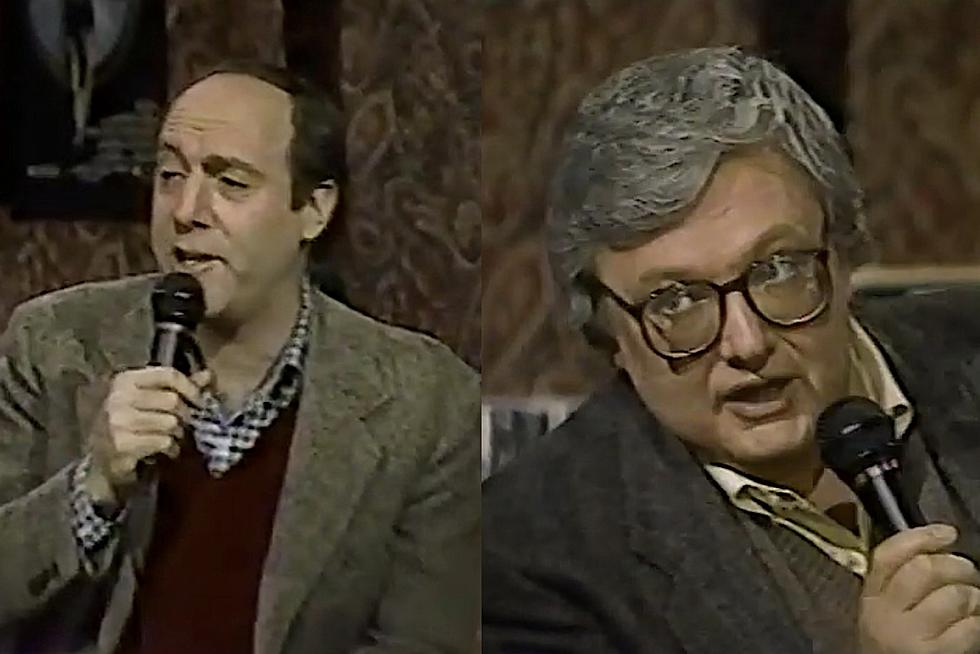
But I’ve never really thought about why I like lists so much. I grew up obsessively watching Siskel & Ebert, which devoted annual episodes to the hosts’ lists of the best and worst films of the year. Those episodes were always appointment viewing, even if Roger Ebert apparently hated doing them. In 2012, he said lists “had value only in the minds of feature editors fretting that their movie critics had too much free time” and called them a “diabolical time-waster designed to boost a web site’s page visits.” (Which, uh, fair.)
That might explain why only Gene Siskel contributed to the single most important list of my teenage years: The American Film Institute’s 100 Years, 100 Movies. First announced in 1998, the AFI Top 100 was created to honor 100 years of cinema and 30 years of the American Film Institute. In its own words, the AFI recruited 1500 "leaders in front of and behind the camera, filmmakers, executives, exhibitors, journalists, historians, as well as notable Americans" to vote for the titles they considered “the 100 greatest American movies of all time.”
Voters were given a list from the AFI of 400 nominated films, and asked to judge them based on “popularity over time, critical and award recognition, creative and technical achievement, historical significance, and cultural impact.” Their top 100 was revealed on a star-studded, three-hour TV special that aired on CBS, hosted by Jodie Foster, Richard Gere, and Sally Field. The best of the best, according to voters, was Orson Welles’ Citizen Kane.
The TV broadcast of the AFI Top 100 is quite the document of the late 1990s. It includes Mel Brooks singing the praises of the original Frankenstein, and Chevy Chase (in sunglasses!) explaining Charlie Chaplin’s importance to the world of physical comedy. Samuel L. Jackson talks about D.W. Griffith’s notoriously racist but hugely influential silent feature The Birth of a Nation, and Dustin Hoffman gets choked up as he explains how much his role in Tootsie meant to him.
The talking heads include a wild array of actors, directors, and celebrities ranging from Bill Clinton to Woody Allen to Sarah Ferguson to Donald Trump, who joked on the broadcast about watching King Kong for the buildings, not the giant ape.
READ MORE: Movies That Were Supposed to Be Huge, Then Flopped
The 100 Years, 100 Movies TV special was a hit on CBS; it was later broadcast in extended form on TNT. For the next 11 years, the AFI built on that success with new annual rankings. In 1999, they listed the 100 greatest movie stars (Humphrey Bogart was chosen as the #1 actor; Katharine Hepburn topped the list of actresses). In 2004, they revealed the 100 greatest movie songs. (“Over the Rainbow” from The Wizard of Oz reigned supreme in that one.)
In 2007, they updated the original Top 100 after a new round of voting. Citizen Kane remained number one, but the overall order of titles was quite different. 23 new films joined the Top 100, like Sidney Lumet’s 12 Angry Men and Ridley Scott’s Blade Runner, while 23 others were removed, including Vicente Minnelli’s An American in Paris and Kevin Costner’s Dances With Wolves.
After the updated Top 100, the AFI published one more annual list — technically 10 shorter lists of 10 great films in genres like animation, gangster, and sci-fi. But there was never a 20th anniversary update to the original Top 100. There were no lists of any kind, in fact.
The American Film Institute still exists, and still does important work running a conservatory and its annual AFI Fest, among other projects. But they stopped producing annual lists in 2008. The ones they created in the past remain prominently featured on the front page of AFI’s website, but they haven’t been updated in almost 20 years.
From what I can gather online, the annual list tradition mostly ended because the CBS broadcasts stopped garnering the big ratings. It also probably didn’t help that the lists were sometimes quite controversial. In June of 1998, Roger Ebert answered a reader letter about the AFI Top 100, and its confusing inclusion of the British film The Third Man in a ranking of the great American movies, by dismissing the whole project out of hand.
“The entire AFI list has been a fiasco,” Ebert declared, adding that it was “an arbitrary selection of 100 titles from an equally arbitrary selection of 400 titles, chosen by an arbitrary group of voters, many of whom have bad taste and are uninformed about film history.” He suggested the boondoggle could have been called “The 100 Greatest Relatively Recent Popular Studio Films Mostly About White Males.”
Yes, the AFI Top 100 list is flawed. (The list of people called upon to talk about it on the CBS TV special is very flawed.) The broadcast is maddening at times. In order to cram all 100 films into a three-hour program, most of the honored titles received only a minute or two of screen time. Many A-list stars appear — no wonder the show got big ratings — but almost no historians or critics. As a result, the “experts” featured onscreen offer little historical context or technical insights. Who gives a crap what Tommy Larsorda thought about Patton?
But in some ways, those flaws make the list more valuable as a time capsule, capturing not only what people thought of as canonical American cinema in the late 1990s, but also whose opinions and voices were valued in the assessment of canonical American cinema at the time. (“Tommy Lasorda, why is F.W. Murnau’s Sunrise: A Song of Two Humans one of the true masterpieces of the silent era?”)
The changes to the voters and to the final list in the updated top 100 nine years later reflect that — and, in fact, Ebert himself offered a far more generous assessment of the AFI’s ranking in 2007. “The television special makes money for the American Film Institute, which is a noble and useful institution,” he noted. “And some kid somewhere is gonna rent Citizen Kane and have the same kind of epiphany I had when I first saw it as a teenager.”
Exactly. I’d already watched Citizen Kane by the time that first AFI Top 100 debuted in 1998 (I was one of the dorkiest children who ever lived, in retrospect I am astonished I didn’t wear suspenders and a pocket protector to school), but the rest of the list became my first cinematic bible. Before every visit to the video store, I would consult it, then try to pick off a title or two.
I never made it through the whole Top 100 — to this day, I still need to watch George Stevens’ A Place in the Sun — but AFI introduced me, and a lot of budding cinephiles of my generation, to so many great movies. They also, I realize now, introduced me to the joy of lists, and of using them as guides through the world of film.
The AFI Top 100 fulfilled a need that was not being met in those very early days of the internet. There simply wasn’t the abundance of movie lists and resources like there are now. But as someone who makes and reads a lot of lists I can tell you with confidence: Most online lists suck. I don’t mean in the “How could u leave off [insert favorite movie] your hole list sucks” sort of thoughtless internet comment way. I mean the vast majority are made as fast as possible by as few people as possible (or by no people, thanks ChatGPT). They involve almost no research, and they mostly regurgitate the same handfuls of titles over and over. Instead of a canon, you get an echo chamber.
Say what you will about the AFI’s final picks, but that’s not how their list was made. They polled 1500 people! They compiled their picks into a handsomely produced television special! The selections might have been imperfect. (The talking heads were definitely imperfect.) But they produced a list that people talked about and debated and which absolutely advanced the cause of historical film education.
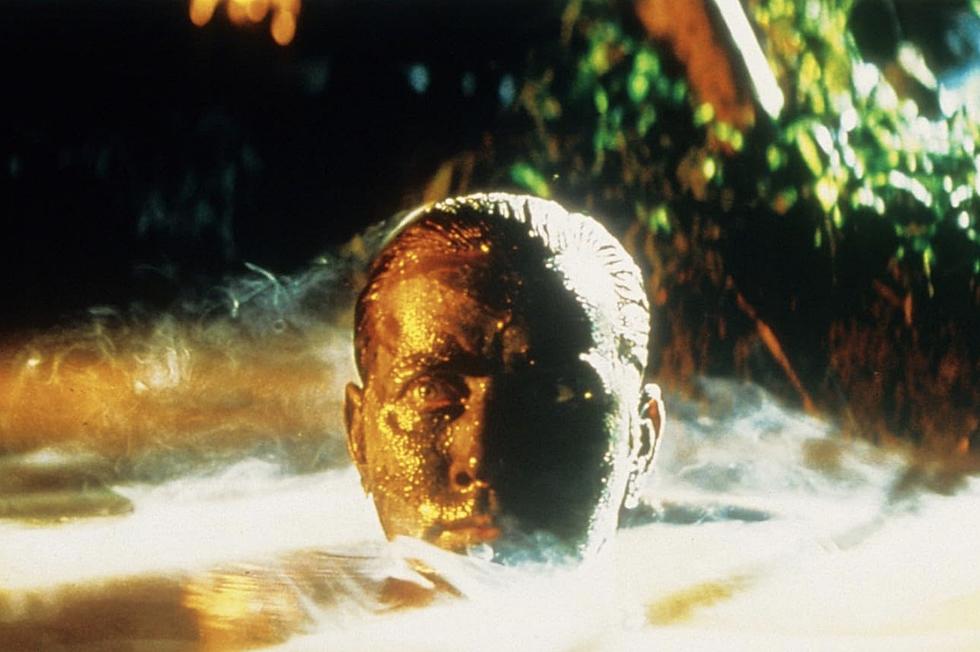
That’s why the AFI needs to revive the Top 100 tradition. Not every year; that was overkill. But once a decade would be so useful, like an American cousin to Sight & Sound’s authoritative “Greatest Films of All Time” list, which even Roger Ebert respected enough to vote in every ten years. (In 2012, his personal ballot included Apocalypse Now, La Dolce Vita, and The Tree of Life.) The updated AFI list could then be promoted on Letterboxd, it could be discussed on TikTok. A new special could air on TCM. The lists’ choices could be screened at repertory theaters, and hyped on streamers like Netflix or the Criterion Channel.
Sure, you can still find the old AFI list; it’s probably a lot easier to watch its selections now than it was when I tried to do it as a teenager relying on his local Blockbuster. (You haven’t known true shame until an exhausted staffer in a blue and yellow polo shirt has given you a withering death stare after you asked them to check if they carry The Best Years of Our Lives ... and The Philadelphia Story ... and All Quiet on the Western Front ... oh and also Doctor Zhivago.)
But film history didn’t end in 2001. That was the year of the most recent film��included in AFI’s updated Top 100, Peter Jackson’s The Lord of the Rings: The Fellowship of the Ring. Think of all the modern masterpieces that deserve to be considered for that authoritative list, and the new generation of potential filmgoers that could be incepted with the love of old movies.
Come to think of it: 2028 would mark the 30th anniversary of that original AFI list, a perfect occasion for its return. That timeline would also provide plenty of time to assemble another 1500 leaders in front of and behind the camera, filmmakers, executives, exhibitors, journalists, historians, as well as notable Americans. Tommy Lasorda sadly passed away in 2021, but I would be happy to contribute on his behalf. And I bet a lot of others who owe some of their film education to the AFI Top 100 would be too.

Movies That Were Abandoned During Production and Never Finished
More From ScreenCrush