
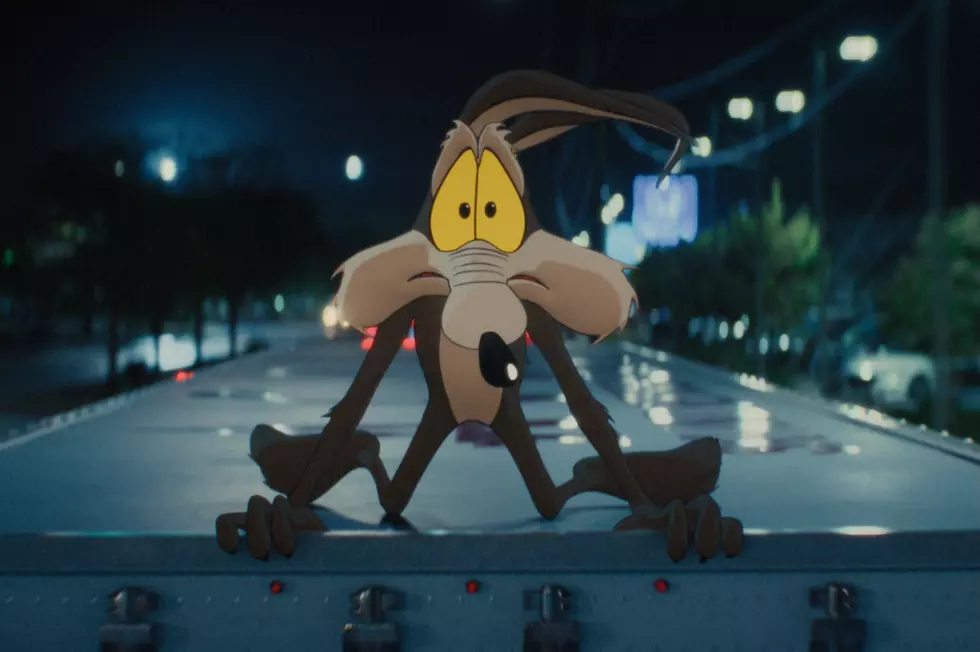
‘Coyote vs. Acme’ Review: A Looney Movie of the Moment
Most of the Looney Tunes cast of characters come in pairs: A charismatic hero and the bumbling villain he perpetually outsmarts. Bugs Bunny munches carrots as he stays a step ahead of Yosemite Sam; Tweety Bird tawt he taw a puddy tat, but Sylvester the puddy tat never gets him.
That’s also true of Road Runner and Wile E. Coyote — to a point. Unlike most of the other Looney Tunes dyads, the Road Runner is not especially charming or compelling. He runs and he beeps. That’s it. Alhough Wile is the nominal villain of their shorts — he is trying to kill and eat that bird, after all — the cartoons are presented largely from his perspective. We follow him as he tries and fails over and over again. The Road Runner endures, Wile suffers. If the audience ever stopped to think about the mindless cartoon violence, they might observe the coyote is something of a pathetic, and even sympathetic creature.
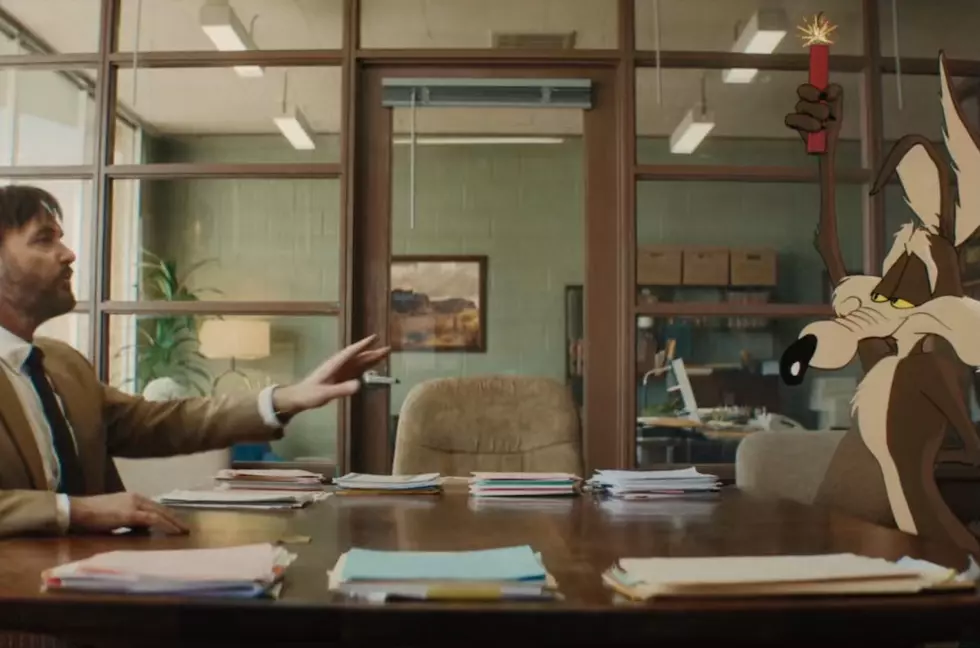
I watched a lot of cartoons growing up, but I must confess, I was one of the viewers who never spared a thought for Wile. But clearly the men and women who made Coyote vs. Acme did. This new Looney Tunes animated/live-action hybrid elevates the franchise’s most durable punching bag to the status of a tragiccomic icon. After decades of fruitless pursuits, Wile finally realizes his problem: He’s put all his faith in shoddy gadgets bought from the Acme Corporation. So Wile takes Acme to court with the help of an attorney named Kevin Avery (Will Forte), a shyster is nearly as hapless as his client.
READ MORE: The 10 Best Comedies of the Last 10 Years
From that basic concept (inspired by a New Yorker article by Ian Frazier), writers Samy Burch, James Gunn, and Jeremy Slater produced a script that is not only as funny and frenetic as the old Looney Tunes shorts, it’s sweet and thoughtful too. It’s a bit on the long side — the Looney Tunes characters were built to be enjoyed in five-minute spurts, and that’s still their ideal venue — but Coyote vs. Acme never wears out its welcome to the point that you start wondering when Porky Pig is going to show up to announce “That’s all folks!”
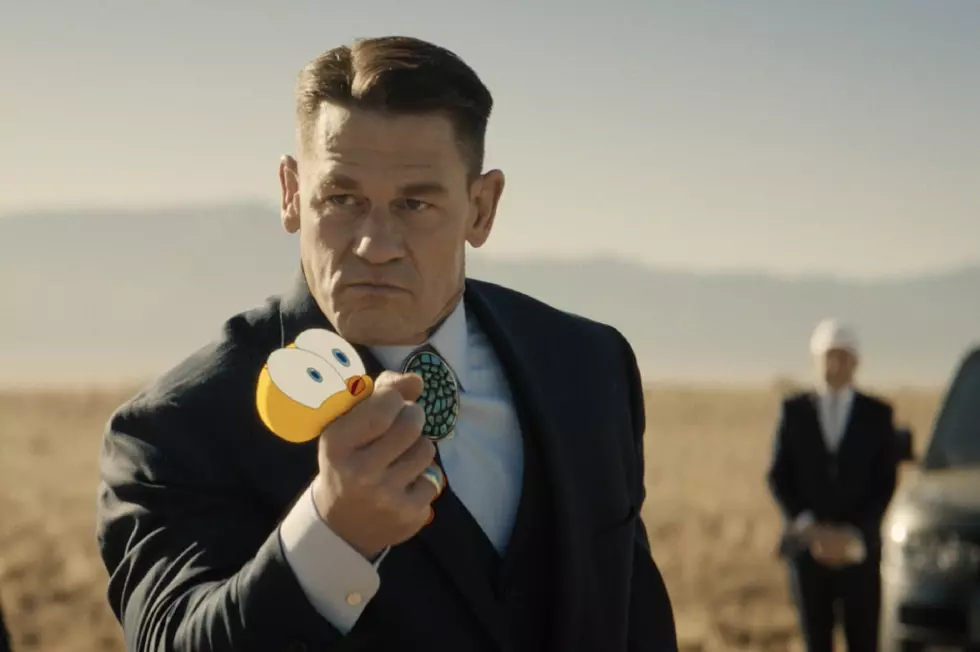
Actually, Porky shows up early in Coyote vs. Acme, as do most of the iconic Tunes toons. (Acme is run by a cocky — I say I say cocky — Foghorn Leghorn.) But the focus throughout remains squarely on Kevin and Wile, who, true to his depiction in the original shorts, never speaks. Wile instead communicates entirely through handheld signs and his impossibly expressive animated face. Wile employed an endless array of Acme gadgets through the years, an idea those writers and director Dave Green take to its logical conclusion: Acme is now an all-powerful company with enough market-share and high-powered lawyers like John Cena’s Buddy Crane to swat away any potential threats to their control of the economy. That sets up a legal battle that casts Kevin and Wile as unlikely underdogs with about as good a shot at defeating their adversary as, well, Wile has of getting his paws on chosen prey.
The meta-narrative around Coyote vs. Acme is a bit of a David versus Goliath story as well. The film was produced by Warner Bros. Discovery, but after it was completed the company decided to shelve the movie in conjunction with a “strategic realignment plan associated with the Warner Bros. Pictures Animation group” (and reportedly to take a $30 million write-off on its taxes). After word of their plan broke in the press, filmmakers and fans raised a huge stink, one big enough to impress Pepé Le Pew (who does have one very funny moment in Coyote vs. Acme). Eventually, WBD relented and sold the picture to Ketchup Entertainment, who are now releasing it to theaters.
I will leave it to you, dear reader, to decide why a studio in the midst of a massive merger with another studio would choose not to release a highly entertaining legal thriller about a cartoonishly evil mega-corporation engaged in conspiracies to maintain monopolistic control over the economy through their shady connections with a willfully inefectual government. All I know is that Coyote vs. Acme is truly a movie of its moment.
It’s a call for ordinary people to shake off their learned helplessness and do something about the sorry state of the world. It’s also a passionate plea against capitalistic greed — not too shocking, given Coyote vs. Acme’s subject matter. (Again, no idea why a multinational company would not want this movie to see the light of day.) But the fact that it’s also a subtle but fervent argument against laboratory testing of animals is a bit of a surprise.
If Coyote vs. Acme was a heavy-handed screed about these various ideas, it would be totally insufferable, and maybe worthy of burying in an oversized vault furnished by the good people of the Acme Corporation. But it’s not. All of its ideas are sublimated beneath a consistently silly surface that carries viewers along through one anarchic blast of vintage Looney Tunes lunacy after another.
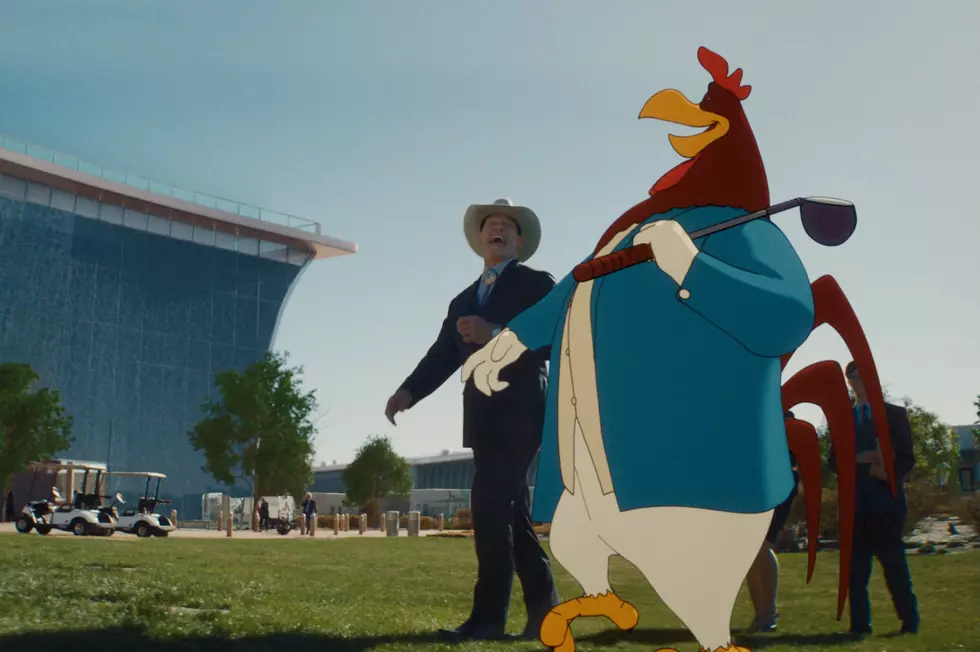
The actors blend seamlessly with their cartoon counterparts — 35 years after Roger Rabbit, their interactions are so seamless you might not clock just how impressively Coyote vs. Acme combines animated and live-action performers. Forte and Cena, each outsized onscreen personalities that might qualify as human cartoons, serves as fine foils to Wile and to each other, and the voice work by Eric Bauza and others honors Mel Blanc with their quippy precision.
Above all, Coyote vs. Acme is a whimsical and delightful movie. The fact that Warner Bros. released the miserable Space Jam: A New Legacy in theaters and on streaming, and only deigned to hand Coyote vs Acme to another distributor after a very public shaming is about as bleak a juxtaposition as you will find in modern Hollywood — and that’s before you take into account the two films’ respective themes about the media and unchecked avarice. WBD could have recognized that, whatever Coyote’s box-office potential, it was a quality production that deserved their support. They chose not to give it. And that’s all, folks.
Additional Thoughts
-I am not the biggest Looney Tunes scholar in the world, but even I recognized and appreciated many nods to the series’ history sprinkled throughout the film. My favorite: Naming Forte’s character after animator Tex Avery (and his law firm Avery, Jones & Maltese after his colleagues Chuck Jones and Michael Maltese). Also: Avery, Jones & Maltese have a surprisingly detailed website and Instagram account. You might want to consider hiring them the next time a cartoon piano falls on your car.
RATING: 8/10

10 Movies That Were Altered After They Were Released
Gallery Credit: Emma Stefansky
More From ScreenCrush