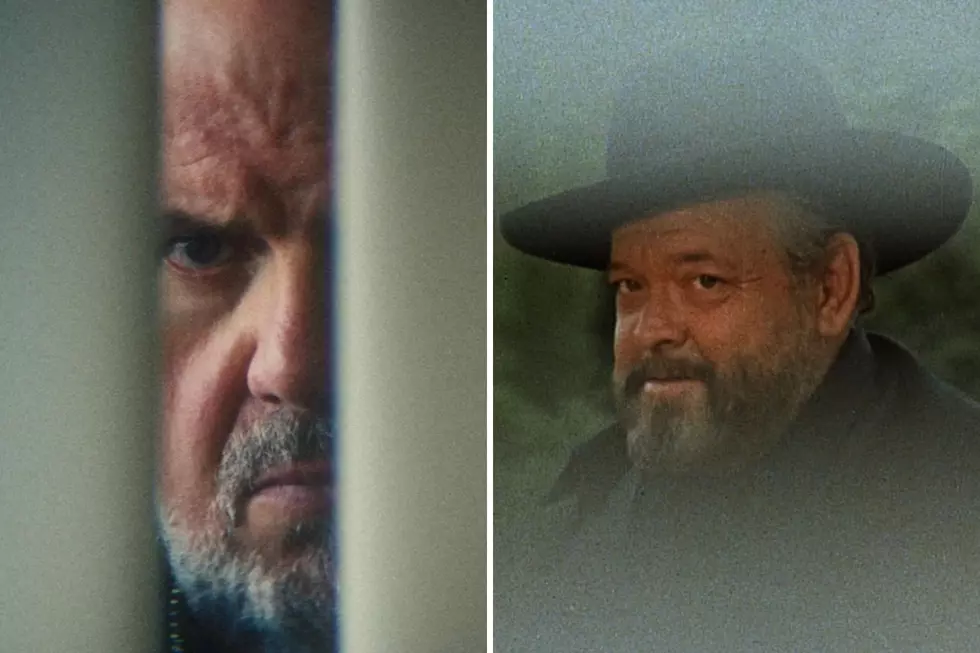
8 Films to Watch If You Love ‘You Can See Everything’
Everyone is talking about You Can See Everything, Nathan Fielder and Lance Oppenheim’s provocative, three-hour documentary about disgraced entrepreneur and inventor Elizabeth Holmes. A few weeks ago, almost no one even knew the film existed. Now it’s selling out theaters around the country and earning rave reviews that frequently call it the best film of 2026. It looks like it stands a very real chance to become the first documentary ever nominated for the Academy Award for Best Picture.
You Can See Everything boldly breaks with longstanding documentary traditions; it includes reenactments, elliptical editing, and features on-camera appearances from both filmmakers as they try to determine whether Holmes is a charlatan or a victim. It’s a clever, exciting film — but it’s hardly the first documentary to question its own form, or to blend fiction and non-fiction in a single work.
If You Can See Everything left you hungry for more documentaries like it, here’s what to watch next.
Gimme Shelter (1970)
Directed by Albert Maysles, David Maysles, and Charlotte Zwerin
Currently Streaming on HBO Max
This landmark concert documentary follows the Rolling Stones on their 1969 U.S. tour, which culminated with their performance at the Altamont Speedway, where a young man was killed in the middle of their set. But the film is also about the Stones watching their performances, both on and off camera, and commenting on their shows and the violence carried out by their fans. The way they reckon with their celebrity and their public personas offer some interesting echoes of “the real” Elizabeth Holmes in You Can See Me, and the way Nathan Fielder grapples with his subject on camera.
F For Fake (1973)
Directed by Orson Welles
Currently Streaming on HBO Max and the Criterion Channel
50 years before Oppenheim and Fielder deconstructed the documentary form in the middle of a documentary, Orson Welles performed a similar magic trick with his delightful late-career masterpiece F For Fake. Welles leads viewers through a history of notable frauds and fakers — including himself! — and largely depicts them very sympathetically (another thing it has in common with You Can See Everything).
Sherman’s March (1986)
Directed by Ross McElwee
Currently Available for Rent
Nathan Fielder puts himself in the center of the frame in just about everything he makes, and no matter what else You Can See Everything is about, it’s also about its co-director and his feelings of loneliness and isolation. For a masterclass on that sort of extremely personal filmmaking, check out Ross McElwee’s Sherman’s March, which is self-described on its title screen as “a meditation on the possibility of romantic love in the South during an era of nuclear weapons proliferation.” McElwee originally set out to make a film about the lingering impact of the Civil War in the American South. Instead, Sherman’s March became more and more about him, and his own history and his trouble with relationships.
Close-Up (1990)
Directed by Abbas Kiarostami
Currently Available for Rent
The blurry line between fiction and non-fiction was a pervasive theme throughout the career of the great Iranian filmmaker Abbas Kiarostami; most of his films would make solid candidates for a double feature with You Can See Everything. The obvious place to start if you’re not familiar with Kiarostami’s work is Close-Up, a blend of documentary and fiction about a true-crime case involving an Iranian man who tricked a family into believing he was famous Iranian director Mohsen Makhmalbaf. Kiarostami filmed the man’s trial, and afterwards, convinced both the phony and his victims to reenact their prior interactions for his cameras. Kiarostami blended the reenactments with footage from the trial into a moving story of a fraud with an utterly authentic love of cinema.
Stories We Tell (2012)
Directed by Sarah Polley
Currently Streaming on Hoopla, Kanopy, Tubi, and YouTube TV
You Can See Everything is the perfect title for Fielder and Oppenheim’s film, but if they had needed a backup Stories We Tell would have worked pretty well too — if it hadn’t already been used for Sarah Polley’s terrific autobiographical film investigating the mystery of her own parentage and the way we create and perpetuate stories (or outright lies) about our lives. Like YCSE, the film uses reenactments to depict events from the past where cameras weren’t present.
The Act of Killing (2012)
Directed by Joshua Oppenheimer
Currently streaming on Kanopy
It’s one thing for a documentary to hire actors to reenact certain historical events. It’s another to convince the real-life participants in those events to reenact them in front of the cameras — and still another when those real-life participants are recreating murders that they claim to have perpetrated. That’s what transpires in The Act of Killing, which director Joshua Oppenheimer later said created “perhaps a new form of documentary, a kind of documentary of the imagination,” one that raises a lot of the same questions as You Can See Everything.
Actress (2014)
Directed by Robert Greene
Currently Streaming on Fandor
Acting and performance lies at the center of Robert Greene’s Actress, which he once described as a “nonfiction/melodrama hybrid” about Brandy Burre, an out-of-work actress and mother who tries to resurrect her career after time off spent raising her children. Greene observes Burre’s day-to-day life, but also leaves room for us to ponder the character Burre is portraying, not only for his cameras but for everyone in the world around her.
Ren Faire (2024)
Directed by Lance Oppenheim
Currently streaming on HBO Max
Before he co-directed You Can See Everything, Lance Oppenheim directed and co-created this extremely entertaining documentary miniseries that plays like a real-life Game of Thrones. Visually, it looks very similar to You Can See Everything, a choice that lends an epic feel to the behind-the-scenes power struggle for control of the long-running Texas Renaissance Festival — which, in turn, makes the whole show that much funnier because it’s people fighting for control of a Renaissance festival.
The 10 Most Hilarious Bad-on-Purpose Movies
Gallery Credit: Emma Stefansky
More From ScreenCrush